

Nature
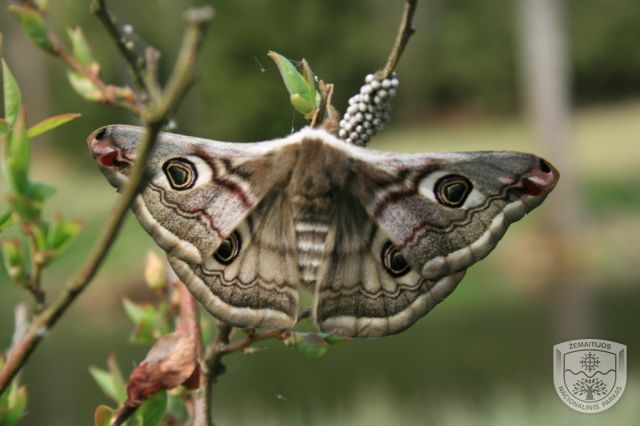
In the Park, 193 species of birds have been registered, 54 among them are very rare (Black stork (Ciconia nigra), Buzzard (Buteo, buteo), Red-necked Grebe (Podiceps grisegena), Gray-headed Woodpecker (Picus canus) and others. 13 species of mammals of total number 49 have been listed by the Red List of Lithuania (lynx, otter, white rabbit and others). Even 11 species of bats live on the territory of the Park (overall number in Lithuania 15 species). Most frequently Brown long-eared bats (Plecotus auritus) and Nathusius‘ pipistrele bats (Pipistrellus nathusii) are met. In the waters of the Park, 31 species of fishes are breeding, also some whitefishes live here – vedace and lake whitefish that have been living here since post-glacial period. The wide-claw crayfish also live in abundant lakes and streams. 2129 species of invertebrates are known, among them 620 species of insects and 660 species of butterflies.



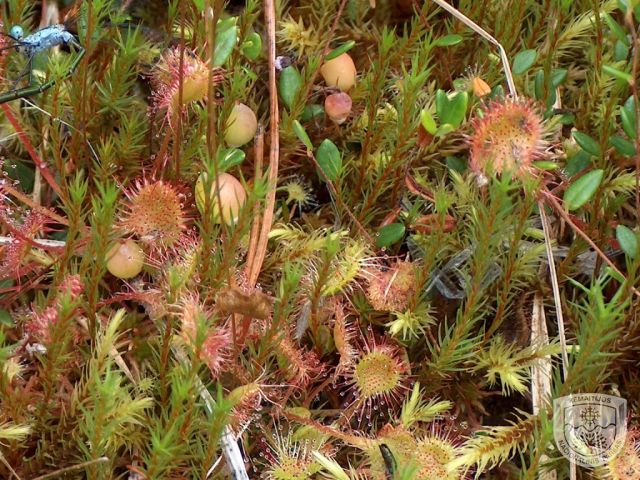
In the Park, 1253 species of plants have been described. 70 of them have been listed by the Red List of Lithuania. The European – protected species grow here: Little grapefern (Botrychium simplex), Fen orchid (Liparis loeselii) and slender green feather moss (Hamatocaulis vernicosus). Some relicts of a glacial period have been found in the Park: Sawtooth sedge (Cladium mariscus), Tufted bulrush (Trichoporum caespitosum), Swamp sedge (Carex acutiformis), Perennial honesty (Lunaria rediviva), Lapland willow (Salix lapponum), Bird‘s eye primrose (Primula farinosa).
Biologists are amazed by numerous populations of Platanthera chlorantha, Pinguicula vulgaris, Dactylorhiza maculata, Dactylorhiza ochroleuca, Dactylorhiza longifolia, Liparis loeselii, Listera cordata. The only place of growing of Botrychium simplex was found here.



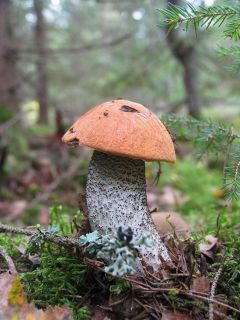
So far, over 500 species of fungi and 260 of lichen have been found in the Park: 48 species of lichen are listed by the Red List of Lithuania. Rare fungi species are as follows: Dusky bolete (Porphyrellus porphyrosporus), Hen-of-the-woods (Grifola fondosa), Cinnabar Polypore (Pycnoporus cinnabarinus) and others. Rare species of lichen are as follows – Tree lungwort (Lobaria pulmonaria), Phaeophyscia endophoenicea, Beard Lichen (Usnea glabrata) and others.
2 species of mushrooms and 13 species of lichens are endemic in the Park.


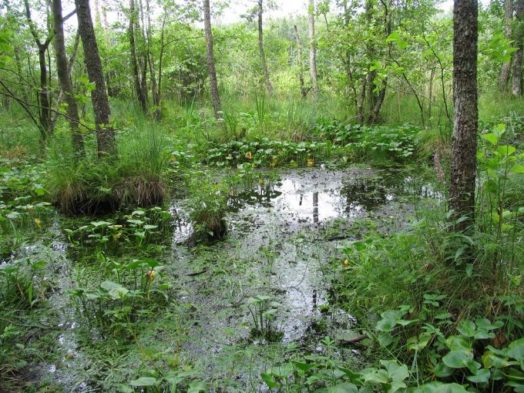
Forest is one of the most important ecosystems of the National Park, rich with great variety of flora, fauna and mushrooms. Location and condition of the forests influence the quality of air, water and landsdcape in the surrounding area.
Forests occupy almost 45% of the territory of the National Park. They are classified as: 1st group (reserves) – 9%, 2nd group (preservation of ecosystems and recreation) – 31%, 3rd group (protected areas) – 36%, 4th group (industrial timber) – 24%. Fir groves prevail in the Park (47%), other common groves are pine (26%), birch (13%), alder (4,4%), oak-woods (4,1%). Some forests of the Žemaitija National Park meet the requirements of the EU Habitats Directive.
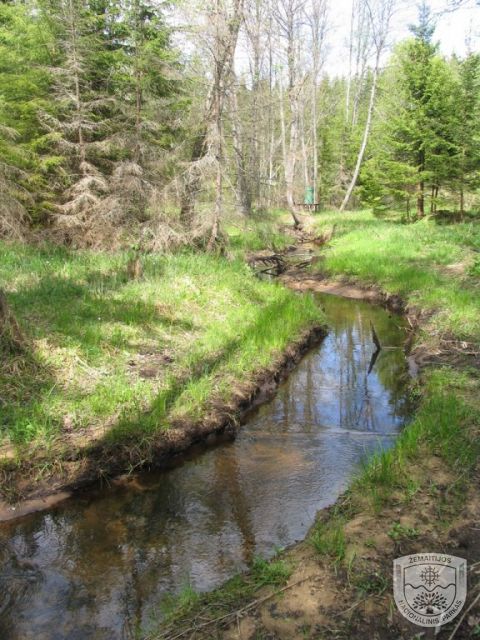
The biggest river of the National Park the Babrungas has its source from the lake of Plateliai; its length is 47,3 km, 10 km of them run through the territory of the Park. Though, the Uošna river is considered to be the longest on the territory of the Park (13,3 km of 16,6 km lay across the Park). Besides the mentioned rivers there are 32 rivulets , 17 of them of it run only across the territory of the Park. The total length of these rivultes is 103,5 km, approximately 30 rivulets have their source in the Park. The largest part of the rivers and rivulets of the National park (51%) have been reclaimed and straightened.
There are quite a few springs in the territory of the Park, some of them even have sacral meaning. Springs of Plokščiai (3,2 ha) and Pilelis (2,4 ha) are natural monuments. Visitors can easily reach the springs of St. John and Pilelis.

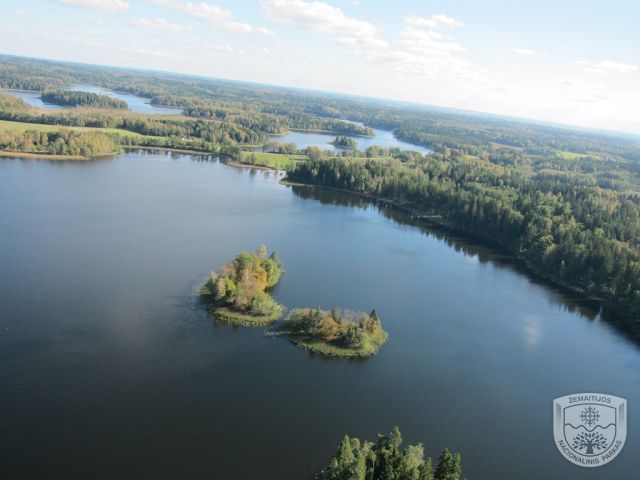
There are 26 natural lakes and small lakelets, which were formed during a post-glacial period in the Park. Their total area is 1484.2 ha. Three largest lakes, Lake Plateliai, lake Ilgis and Beržoras lake, occupy approximately 90% of the total area. The bottom relief of these lakes is complex, and there are islands on all of them (Lake Plateliai has 7 islands, lake Ilgis has 2 ones and Beržoras lake has 1 island). The most picturesque, the cleanest and deepest lake in the Park and in Žemaitija region is Lake Plateliai. Its area is 1205 ha, the average depth –10.5 m, the deepest point – 50 m, the average water level –146.5 m above sea level.
There are lots of small lakes in the territory of the Park, 23 of them have the area less than 5 ha each; and another 10 natural water reseroirs have the area less than 1 ha each.
The lakes of Burgis and Luoka have vegetation of Chara spp. The lakes of Burgis, Burgalis and Skyplaičiai have lots of benthic vegetation of Chara spp. Acoording to the EU Directive on vegitations the above lakes may be defined as a hard oligo-mesotrophic waters with the benthic vegetation of the Chara spp.The lakes of Vaivadė (Petreikis), Burgis, Endriuškaičiai, especially their turfy bays are full of Magnopotamion and Hydrocharition. There are lots of natural nourishment in these lakes, they are natural eutrophic lakes with Magnopotamion or Hydrocharition-type vegetation. There are small lakes surrounded by marsh in the Park (Lestis, Piktežeris, Aklaežeris), thery are attributed to natural dystrophic lakes. There is almost no flora in them; the water is brown because of turf and humus accids.


Marsh is one of the most important and preserved ecosystems. Due to the hilly and woody landscape structure of the Žemaitija National Park, a lot of marshes of different sizes had been formed in the lowlands between the hills.
The typical example of the western Žemaitijos upland bog is the marsh of Šarnelė in the wetland of Paparčiai. The medium-sized low-lying marshy lands of the alkali type prevail in the Park. The marshes of Siberija, Šeirė, Stirbaičiai, Lieptai, Velėnijos, Sidabrinė, Paburgis, Juodupis, Briedinė and others are interesting because of its dense groves of sedge turning into the clearings of the short grass and peat-moss. In the marshes of the Park the botanists found the populations of Sphagnum subnitens, Liparis loeselii, Hammarbya paludosa, Coralorchiza trifida, Listera cordata, Dactylorhiza maculata and of very rare Scolochloa festucacea.
Marshes are very important for biological diversity of birds, animals and mushrooms. There are lots of nests of very rare and endangered birds: crane, curlew, snipe, yellow wagtail and others. Small marshes and ponds formed by beavers are extremely important for the bological diversity during first 5 to 8 years.
These low-lying marshy lands and sedgy quags are protected areas in the EU.
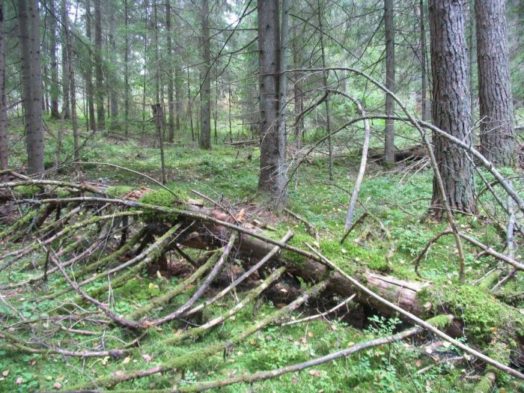
2 Strict Nature Reserves have been separated in the Park – Plokštinė and Rukundžiai Reserves. No forestry, agriculture or any other type economic activity is permitted in the strict nature reserves. Gathering of forest products, hunting and educational tourism are not permitted here. Only visitors having scientific purposes are allowed to visit these locations if they have permits, issued by the Administration of the ŽNP.
Plokštinė reserve is aimed to perserve standard complex of Plokštinė woods and marsh with ecosystems typical for this region, rare species of plants, mushrooms and animals, natural streams of Juodupis and Uošna and unique geomorphological structure of Plokščiai thermo-sinkhole.
Rukundžiai reservation preserves the unique natural complex of marshy woods of Aklaežeris and the stream of Pietvė.
